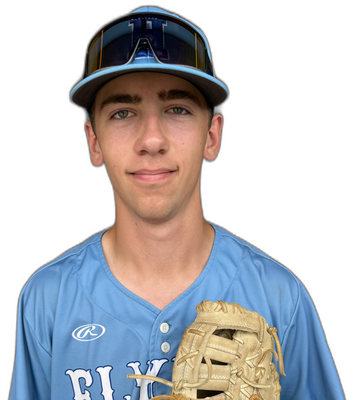
Percentile rankings — Hopkins Flyers
Hitting
Batting Statistics
| Year | Team | G | PA | AB | AVG | OBP | SLG | OPS | H | 2B | 3B | HR | RBI | R | BB | K | SB | ISO | BABIP | BB% | Whiff% |
|---|---|---|---|---|---|---|---|---|---|---|---|---|---|---|---|---|---|---|---|---|---|
| 2026 | Hopkins Millers | 4 | 14 | 10 | .400 | .571 | .500 | 1.071 | 4 | 1 | 0 | 0 | 5 | 4 | 4 | 5 | 1 | .100 | .800 | 28.6% | 57.1% |
| 2026 | Hopkins Flyers | 6 | 13 | 12 | .083 | .154 | .250 | .404 | 1 | 0 | 1 | 0 | 0 | 0 | 1 | 7 | 0 | .167 | .200 | 7.7% | 36.4% |
| 2026 | Hopkins JV Royals | 5 | 11 | 9 | .222 | .364 | .222 | .586 | 2 | 0 | 0 | 0 | 2 | 2 | 1 | 6 | 0 | .000 | .667 | 9.1% | 52.6% |
| 2025 | Hopkins Millers | 31 | 92 | 73 | .288 | .424 | .370 | .794 | 21 | 4 | 1 | 0 | 17 | 13 | 17 | 20 | 4 | .082 | .389 | 18.5% | 34.2% |
Pitching Statistics
| Year | Team | G | GS | BF | IP | ERA | FIP | WHIP | K | BB | H | HR | R | ER | HBP | BAA | K% | BB% | K/BB | S% |
|---|---|---|---|---|---|---|---|---|---|---|---|---|---|---|---|---|---|---|---|---|
| 2026 | Hopkins Millers | 1 | 0 | 11 | 1.0 | 42.00 | 9.50 | 8.00 | 0 | 2 | 6 | 0 | 7 | 6 | 0 | .667 | 0.0% | 18.2% | 0.00 | 52.0% |
| 2026 | Hopkins Flyers | 1 | 0 | 6 | 0.0 | -- | -- | -- | 0 | 3 | 1 | 0 | 6 | 6 | 2 | 1.000 | 0.0% | 50.0% | 0.00 | 37.0% |
| 2026 | Hopkins JV Royals | 5 | 0 | 30 | 5.0 | 9.80 | 5.50 | 2.80 | 4 | 5 | 9 | 0 | 7 | 7 | 1 | .375 | 13.3% | 16.7% | 0.80 | 51.9% |
| 2025 | Hopkins Millers | 1 | 0 | 5 | 1.0 | 7.00 | 4.50 | 2.00 | 1 | 1 | 1 | 0 | 1 | 1 | 0 | .250 | 20.0% | 20.0% | 1.00 | 60.0% |
Stat Glossary
How each statistic is calculated and what it tells you about a player.
The classic measure of how often a batter gets a hit per at bat. Simple and widely understood, though it treats all hits equally and ignores walks.
Measures how often a batter reaches base by any means. Strongly correlated with run scoring — the most important job of a hitter is to not make outs.
Weights hits by their extra-base value (1B=1, 2B=2, 3B=3, HR=4). Captures power output that AVG ignores.
Combines getting on base and hitting for power into one number. A reliable single-number offensive summary that correlates well with run production.
A walk has the same value as a single for reaching base. A high walk rate signals a disciplined hitter who is hard to get out.
Strikeouts are the least productive out — no chance of advancement, error, or sacrifice. Lower K rates generally indicate better bat control.
Counts all hits that advance the batter past first base. A simple tally of power contact events.
The raw base-advancement engine behind SLG. Useful for comparing raw power output across hitters.
Measures how often batted balls (excluding HR and K) become hits. League-average BABIP is typically around .300. Sustained deviation up or down often signals luck — useful for identifying hitters who may be over- or under-performing.
Measures baserunning aggression and speed. Value depends on success rate — a low success rate can cost more bases than are gained.
Strips out singles to measure pure extra-base power. A hitter with .200 SLG and .200 AVG has zero ISO — all their hits are singles. Higher ISO = more doubles, triples, and home runs per at bat.
Like OPS but gives OBP 50% more weight, reflecting research that reaching base is more valuable than extra bases. More accurately predicts run contribution than raw OPS.
Bill James's formula estimating how many runs a player produces based on their ability to reach base and advance runners. Scales naturally with plate appearances.
Rewards process over result. A player who fights off tough pitches and works counts is contributing even on outs. High QAB% players put pressure on opposing pitchers.
Normalizes walk frequency per plate appearance regardless of lineup construction. More stable than raw BB counts and a cleaner indicator of plate discipline than BB/K.
Measures how often a batter misses when they swing. High whiff rates indicate vulnerability to strikeouts and difficulty making contact in hitter's counts. Lower is better.
Leadoff PAs are high-value situations — getting on base with nobody out sets up scoring chances. This isolates plate appearances where the stakes for reaching base are highest.
Filters to the plate appearances that most directly affect game outcomes — close-and-late situations with runners on. Separates hitters who perform under pressure from those who pad numbers in lopsided games.
Measures how deep into counts a batter works. Higher PS/PA tires out pitchers faster, exposes the bullpen earlier, and gives teammates a longer look at the pitcher's stuff.
The subset of PS/PA that counts plate appearances reaching at least 6 pitches. Long at bats are disproportionately tiring for pitchers and force mistake pitches.
The standard measure of run prevention per 7 innings (regulation game length at this level). Excludes unearned runs scored after errors. Context-dependent — a pitcher's defense and home park both affect ERA.
Measures how many baserunners a pitcher allows per inning. Lower WHIP means fewer runners reaching base, which directly reduces scoring opportunities. A quick proxy for control and contact prevention.
Raw workload indicator. Starters who pitch deep into games preserve the bullpen. High IP with low ERA separates true aces from one-inning specialists.
The hitter's AVG from the pitcher's perspective. Useful for identifying pitchers who limit hard contact, though like hitter AVG it ignores walks and power.
Strikeouts are the most reliable out a pitcher can record — no chance for the defense to err or a runner to advance. High K totals indicate a pitcher who misses bats and limits contact.
Free passes that put runners on without any defensive chance to make an out. High walk rates inflate pitch counts, strain the bullpen, and lead to big innings. One of the most controllable outcomes for a pitcher.
Removes defense from the ERA calculation by focusing only on outcomes the pitcher fully controls: home runs, walks, hit by pitch, and strikeouts. A pitcher whose ERA is much higher than FIP may have been let down by their defense. Scaled to match ERA so they can be compared directly.
Normalizes strikeout production per batter regardless of inning count. Higher K% pitchers miss more bats, reduce balls in play, and are less dependent on their defense.
Measures overall command. Pitchers who throw strikes early in counts avoid deep, tiring counts, record outs on fewer pitches, and give batters less opportunity to walk.
Getting ahead 0-1 is the single biggest predictor of a favorable outcome for the pitcher. First-pitch strikes lead to weaker contact, fewer walks, and shorter at bats. Derived from play-by-play pitch sequences.
Efficiency metric. Pitchers who throw fewer pitches per inning last deeper into games, preserving bullpen arms. Elite starters typically average 13–15 pitches per inning.
Pitchers typically get worse each time through the lineup as hitters pick up their delivery and pitch mix. TTO splits reveal whether a starter should be pulled after one or two times through — critical for in-game decisions.